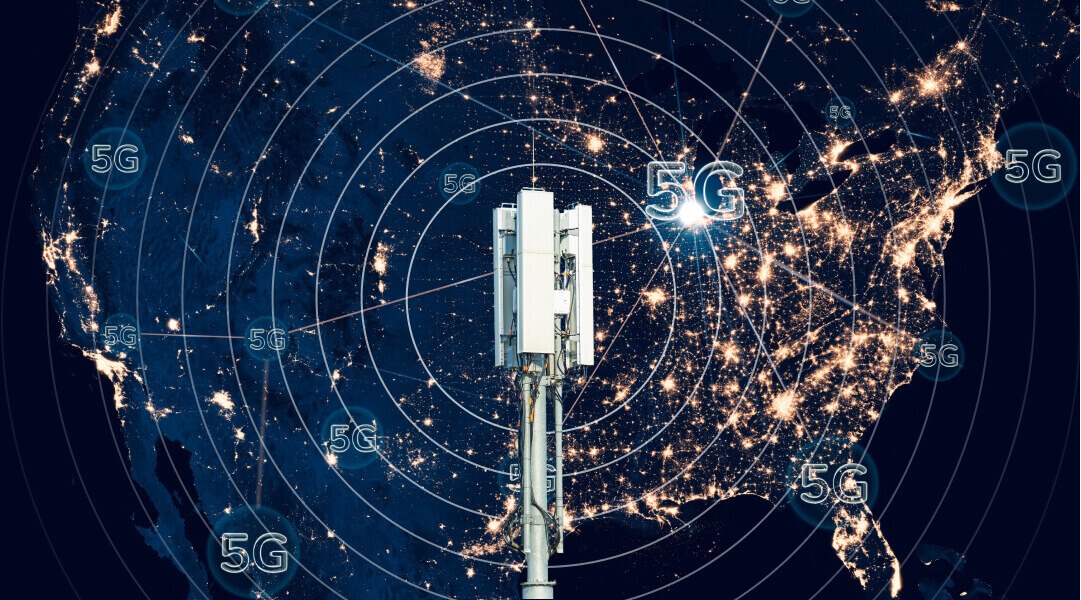
The fastest phone signal you have ever seen may disappear before you cross the street. That is the awkward truth behind millimeter wave 5G, a high-band version of 5G built for speed in tight zones, not blanket coverage across a city. It can fly in a stadium, airport terminal, downtown block, or packed plaza, then fall back to slower service the moment a wall, tree, bus, window coating, or bad angle gets between you and the node. For Americans comparing plans, devices, and carrier claims, the real question is not “Does my carrier have 5G?” It is “Which kind of 5G will I get where I live, work, and move?” Smart buyers should read wireless technology updates with that split in mind, because 5G labels often hide more than they explain. AT&T says its high-band 5G+ is mainly for high-traffic areas such as airports, stadiums, venues, and entertainment districts, while Verizon says its Ultra Wideband combines high-band and C-band rather than one single coverage layer.
Why Fast 5G Turns Fragile Once You Leave the Hotspot
High-band 5G is not weak because carriers built it badly. It is fragile because physics charges a price for speed. Higher frequencies can carry wide channels and huge bursts of data, but they do not travel like low-band cellular signals. They behave more like a narrow beam than a blanket. That works in a football stadium. It gets messy on a shaded residential street.
The signal wants a clean path, not a city obstacle course
A low-band signal can bend, stretch, and sneak through common barriers better than high-band service. A high-band node has less patience. Put a delivery truck, bus shelter, brick wall, tinted glass, or line of leafy trees in the path, and the connection can drop to mid-band, low-band, or LTE.
That is why mmWave coverage often feels magical in one exact spot and ordinary ten steps later. You may see wild speed outside an arena entrance, then lose it in a restroom hallway. The phone did not fail. It lost the clean path the signal needed.
The odd part is that a shorter range can also be useful. In a dense place like Madison Square Garden or SoFi Stadium, a carrier can reuse high-band capacity in small zones without one antenna flooding half the city. Verizon lists many stadiums and arenas where its high-performance service exists in parts of the venue, and it says the service may hand off when you move outside the covered zone.
Speed claims sound broad because labels are broad
Carrier names make this harder. “5G+,” “5G Ultra Wideband,” and “Ultra Capacity” can mix different spectrum layers under one badge. Verizon says Ultra Wideband includes high-band and C-band. AT&T says 5G+ can mean high-band in places where crowds gather, while mid-band 5G+ covers more cities.
That matters because your phone icon may not tell the full story. You can see a premium 5G label and still be on mid-band, not high-band. That is not always bad. Mid-band may give you a better daily experience because it reaches farther and handles buildings with less drama.
Here is the part carriers rarely spell out: the “slower” layer can be the one you enjoy more. A steady 200 Mbps connection in your apartment is worth more than a 2 Gbps burst you can only catch near a lamppost. Speed without hold is a party trick.
What Millimeter Wave 5G Coverage Limitations Mean on Real Streets
The gap between a coverage map and a sidewalk test is where customers get annoyed. A map can show service in a neighborhood, but the high-band layer may live on certain corners, outside certain venues, or along a street canyon where antennas have been placed close together. That is not fake coverage. It is selective coverage, and those are not the same thing.
Coverage maps do not show the tiny dead zones that matter
Carrier coverage maps are useful for a first check, but they cannot show every wall, window, tree, hill, pole placement, or indoor dead spot. Verizon tells users to enter an address to see whether an area has Ultra Wideband, 5G, or LTE, yet it also notes that not every device supports both high-band and mid-band.
That device detail matters more than many shoppers expect. A phone can support 5G and still miss high-band bands. Some unlocked models sold in the U.S. skip certain mmWave hardware to keep cost down. Two people on the same sidewalk, same plan, same carrier, can see different results.
A practical test beats a pretty map. Stand where you plan to use the phone: your desk, apartment window, garage, school pickup line, gym lobby, commuter platform. Run a speed test, then move inside. If the speed collapses near the doorway, you learned more in one minute than a map could show.
Indoors, the best signal may be the less flashy one
Indoor coverage exposes the tradeoff. High-band service can work indoors when the carrier installs indoor systems or aims service into a venue. That is why airports and stadiums show up so often in carrier examples. Random homes, older office buildings, and strip-mall shops are a different story.
Low-band and mid-band signals have a better chance of reaching you behind walls. T-Mobile’s own explainer says high-band has trouble with buildings, thick walls, metal infrastructure, and obstacles, while low-band can travel longer distances and pass through more barriers.
The non-obvious lesson is that your window can become your router. In some 5G home internet setups, moving the gateway from a kitchen counter to a second-floor window can change the whole connection. That does not mean the network expanded. It means your gear found a cleaner path.
Why Carriers Still Build It Despite the Weak Range
It is easy to mock high-band service until you stand in a crowd where ordinary cellular service falls apart. A concert, playoff game, trade show, airport security line, or downtown festival can crush a low-band network. Thousands of phones ask for data at once. That is where high-band starts making sense.
Crowds need capacity more than miles
In a packed venue, range is not the main job. Capacity is. A carrier wants to serve many users in a small area without the network choking. High-band spectrum gives the carrier wide lanes for data, so a dense crowd can upload videos, scan tickets, call rideshares, and message friends.
AT&T frames its high-band 5G+ around places like airports, stadiums, venues, and entertainment districts, and says some airport access requires a compatible band n260 device. That is a clue. The service is built around location and hardware, not a broad promise that every 5G phone gets the same experience everywhere.
A good example is an NFL game. Before kickoff, thousands of fans are trying to post videos and open mobile tickets in the same few gates and concourses. A high-band node near those areas can help where a faraway macro tower cannot. Outside that setting, the advantage shrinks fast.
The network cost changes the rollout math
High-band networks need more small cells, more backhaul, more permits, more power connections, and more street-level planning. A carrier cannot cover rural Kansas, suburban Ohio, or a spread-out Arizona retirement community with the same playbook used for a Las Vegas convention hall.
That is why mid-band became the everyday hero of U.S. 5G. It does not hit the same peak speeds in perfect conditions, but it covers more ground per site. It is also easier to explain to customers because it behaves closer to what people expect from mobile service.
The quiet irony is that high-band can be too precise for normal life. It is excellent at serving a hot zone, yet most phone use is not a hot-zone moment. You check maps in a moving car, take calls in a bedroom, upload photos from a restaurant booth, and stream from a couch. Those places reward reach and steadiness.
How to Judge a 5G Plan Without Falling for the Label
A plan comparison should start with your routine, not the carrier’s fastest demo. The right 5G plan for a traveler who spends time in airports may not be the right one for a remote worker in a townhome. The phone, the plan, the network layer, and your actual address all matter.
Check bands, not only logos
Before buying a phone, look for the supported bands. In the U.S., high-band support often includes n260 or n261, while C-band commonly appears as n77. Verizon says devices supporting n77 plus n260 and n261 can access its full Ultra Wideband network.
That does not mean every buyer needs high-band. Many Americans will see stronger value from a phone with solid mid-band support, good battery life, and reliable carrier compatibility. High-band radios can help in dense venues, but they are not the only reason a phone feels fast.
Use carrier coverage maps as a filter, then confirm with real use. Ask a neighbor on the same carrier. Test near your home. Walk indoors. Try it during a busy hour, not only at midnight when the network is quiet. A good plan should survive normal life.
Watch for plan tiers that hide access differences
Some plans include premium network access. Others may limit hotspot data, deprioritize traffic, or exclude certain network layers. The wording can be soft. A plan may say “5G included,” but that does not always mean the fastest layer, the same priority, or the same hotspot behavior.
This is where mobile plan comparison tips can save money. Paying extra for a logo you rarely touch makes little sense. Paying extra because your commute, stadium job, airport schedule, or downtown apartment puts you inside strong high-band zones may make sense.
Also check return windows. A carrier can look great in reviews and still fail in your building. No national ranking can know the angle between your bedroom window and the nearest small cell. Your address is the final judge.
Conclusion
The honest way to shop for 5G is to stop treating the icon as a promise. High-band service can be stunning in the right place, but it is not the layer most Americans will touch all day. The better question is whether your carrier gives you a steady mix of low-band, mid-band, and targeted high-band where you spend time. That is where millimeter wave 5G fits best: not as a nationwide blanket, but as a sharp tool for dense, high-demand zones. A carrier that admits the tradeoff deserves more trust than one that sells peak speed as everyday reality. Before you upgrade, test your real locations, check your phone’s band support, and read the plan details line by line. For more buying help, use 5G phone upgrade guidance before signing a new contract. The fastest network is not the one from the ad. It is the one that still works after you walk inside.
Frequently Asked Questions
How far does mmWave coverage usually reach?
It depends on antenna placement, street layout, power, and obstacles, but it is best understood as short-zone coverage. It works well near small cells and venue systems, then can fade fast when distance, walls, vehicles, or trees block the path.
Is high-band 5G better than mid-band 5G?
It is better for peak speed and dense crowds, but mid-band is often better for daily use. Mid-band reaches farther, handles more normal city and suburban conditions, and gives many users a steadier balance between speed and coverage.
Why does my phone show 5G but still feel slow?
The 5G icon does not always mean you are on the fastest layer. You may be connected to low-band, a crowded cell, a weaker indoor signal, or a plan tier with lower priority during busy times.
Do carrier coverage maps show high-band dead zones?
They show a helpful estimate, not every real-world gap. Small changes in building materials, window coating, trees, hills, and antenna angles can affect service. Testing at your actual address gives a better answer than a map alone.
Do I need a special phone for high-band 5G?
Yes, your phone must support the right high-band bands for your carrier. In the U.S., many premium models include support, but some cheaper or unlocked models may skip it. Always check the band list before buying.
Is mmWave useful for home internet?
It can be useful when the home has a strong path to a nearby node. Window placement, elevation, and neighborhood layout matter. If the signal is weak indoors, mid-band fixed wireless or cable may be more dependable.
Why do carriers put high-band 5G in stadiums and airports?
Those places pack thousands of users into small areas. High-band networks can add capacity where normal towers struggle. The goal is not wide reach across miles. The goal is handling heavy demand in tight spaces.
Should I pay more for a plan with premium 5G access?
Pay more only when your routine puts you inside strong premium coverage zones or you need better hotspot and priority terms. For many users, a cheaper plan with good mid-band service will feel almost the same day to day.